En un mundo donde parece ser que todo está estrechamente vigilado por servicios de espionaje, piratas informáticos, cámaras de seguridad, móviles 'inteligentes' y todo tipo de redes sociales en los que la privacidad ha dejado de ser un derecho para convertirse en un privilegio, cabe preguntarse qué pensaría el padre del 'Gran hermano' de la sociedad actual. Recientemente, se hizo pública una reveladora carta de George Orwell en la que el escritor inglés aclaraba las verdaderas razones detrás de su magnífica obra '1984'. He aquí su auténtica inspiración.
Es posible que a mediados de la década de los 40,
George Orwell se enfrentara a la titánica tarea que le ha catapultado a los altares de la literatura en un clima anglosajón muy parecido al que esta semana azota toda la Península o que el ambiente político fuera igual o más convulso que hoy en día, con un Viejo Continente asolado por la segunda Gran Guerra en menos de tres décadas.
Pero, más allá de esta casualidad circunstancial, los paralelismos entre
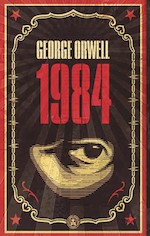
1984, la grandísima y profética novela del literato nacido en Motihari (India), entonces parte del Imperio colonial británico, y la actualidad son más que notables. No son pocos los que acusan a las grandes potencias como Estados Unidos, China o Rusia de controlar a la población mediante las infinitas posibilidades de violación de la privacidad que exhibe Internet, la red de redes, en una suerte de Gran Hermano cibernético que fomente la cotidianedad de la hipervigilancia.
Sin ir más lejos, el escándalo destapado por el informático
Edward Snowden, que denunció que el Gobierno estadounidense tenía conocimiento de que varias de sus agencias militares espiaban sin control a millones de ciudadanos nacionales o extranjeros, ha sido el último episodio de una larga escalada de guerra por el control de Internet que también disputan potencias como Alemania, Irán o Israel.
Sin embargo, recientemente se tiró por tierra una de las certezas que más comúnmente se daban por sentadas alrededor de la obra de Orwell. Gracias a la publicación del libro
'George Orwell: A life of letters', de Peter Davison, en la que se incluye una misiva del propio escritor a un tal Noel Willmett fechada el 18 de mayo de 1944, tres años antes de afrontar su obra más popular, se ha desterrado la idea de que su gran temor dictatorial era
Hitler, al que reconoce poco futuro tras la II Guerra Mundial, sino
Stalin y los intelectuales occidentales.
"Hitler, sin duda, pronto desaparecerá, pero sólo a expensas de fortalecer a Stalin", escribía a Orwell a Willmett, al tiempo que advertía sobre el poder de convocatoria de lo que él llama "führers sobrehumanos" como los ya mencionados,
Franco, Salazar o Mussolini. Sorprende leer como en esta misma pléyade de líderes autoritarios, el escritor británico también incluye a Gandhi, paradigma de la libertad y el pacifismo.
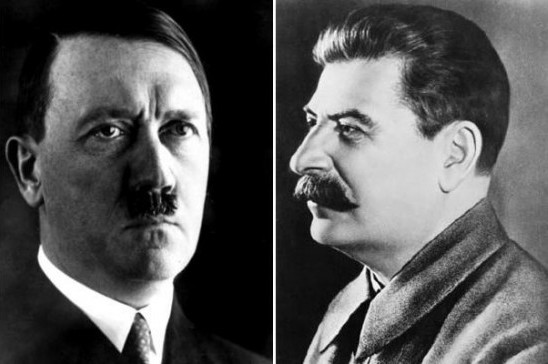
Eso sí, Orwell reconoce que, en caso de tener que elegir entre el Tercer Reich o el Comunismo Stalinista, se decantaría por el segundo ya que "la URSS no puede escapar completamente de su pasado y conserva suficiente de las ideas originales de la Revolución para hacer de ello
un fenómeno mucho más esperanzador que la Alemania nazi".
Asimismo, Orwell lamenta la labor que entonces, y el paralelismo con la actualidad podría dibujarse no sin cierta facilidad, realizaban los intelectuales. "Muchos de ellos están perfectamente listos para los métodos dictatoriales, la policía secreta, la falsificación sistemática de la historia, etc.", mientras que le traslada su preocupación a Willmett al señalar que no está seguro de que el grueso de la población no comparta esta misma manera de pensar antes de una década.
A continuación, transcripción íntegra de la misiva de Orwell a Noel Willmett:
To Noel Willmett
18 May 1944
10a Mortimer Crescent NW 6
Dear Mr Willmett,
Many thanks for your letter. You ask whether totalitarianism, leader-worship etc. are really on the up-grade and instance the fact that they are not apparently growing in this country and the USA.
I must say I believe, or fear, that taking the world as a whole these things are on the increase. Hitler, no doubt, will soon disappear, but only at the expense of strengthening (a) Stalin, (b) the Anglo-American millionaires and (c) all sorts of petty fuhrers° of the type of de Gaulle. All the national movements everywhere, even those that originate in resistance to German domination, seem to take non-democratic forms, to group themselves round some superhuman fuhrer (Hitler, Stalin, Salazar, Franco, Gandhi, De Valera are all varying examples) and to adopt the theory that the end justifies the means. Everywhere the world movement seems to be in the direction of centralised economies which can be made to ‘work’ in an economic sense but which are not democratically organised and which tend to establish a caste system. With this go the horrors of emotional nationalism and a tendency to disbelieve in the existence of objective truth because all the facts have to fit in with the words and prophecies of some infallible fuhrer. Already history has in a sense ceased to exist, ie. there is no such thing as a history of our own times which could be universally accepted, and the exact sciences are endangered as soon as military necessity ceases to keep people up to the mark. Hitler can say that the Jews started the war, and if he survives that will become official history. He can’t say that two and two are five, because for the purposes of, say, ballistics they have to make four. But if the sort of world that I am afraid of arrives, a world of two or three great superstates which are unable to conquer one another, two and two could become five if the fuhrer wished it.1 That, so far as I can see, is the direction in which we are actually moving, though, of course, the process is reversible.
As to the comparative immunity of Britain and the USA. Whatever the pacifists etc. may say, we have not gone totalitarian yet and this is a very hopeful symptom. I believe very deeply, as I explained in my book The Lion and the Unicorn, in the English people and in their capacity to centralise their economy without destroying freedom in doing so. But one must remember that Britain and the USA haven’t been really tried, they haven’t known defeat or severe suffering, and there are some bad symptoms to balance the good ones. To begin with there is the general indifference to the decay of democracy. Do you realise, for instance, that no one in England under 26 now has a vote and that so far as one can see the great mass of people of that age don’t give a damn for this? Secondly there is the fact that the intellectuals are more totalitarian in outlook than the common people. On the whole the English intelligentsia have opposed Hitler, but only at the price of accepting Stalin. Most of them are perfectly ready for dictatorial methods, secret police, systematic falsification of history2 etc. so long as they feel that it is on ‘our’ side. Indeed the statement that we haven’t a Fascist movement in England largely means that the young, at this moment, look for their fuhrer elsewhere. One can’t be sure that that won’t change, nor can one be sure that the common people won’t think ten years hence as the intellectuals do now. I hope?3 they won’t, I even trust they won’t, but if so it will be at the cost of a struggle. If one simply proclaims that all is for the best and doesn’t point to the sinister symptoms, one is merely helping to bring totalitarianism nearer.
You also ask, if I think the world tendency is towards Fascism, why do I support the war. It is a choice of evils—I fancy nearly every war is that. I know enough of British imperialism not to like it, but I would support it against Nazism or Japanese imperialism, as the lesser evil. Similarly I would support the USSR against Germany because I think the USSR cannot altogether escape its past and retains enough of the original ideas of the Revolution to make it a more hopeful phenomenon than Nazi Germany. I think, and have thought ever since the war began, in 1936 or thereabouts, that our cause is the better, but we have to keep on making it the better, which involves constant criticism.


 Si (
Si ( No(
No(


